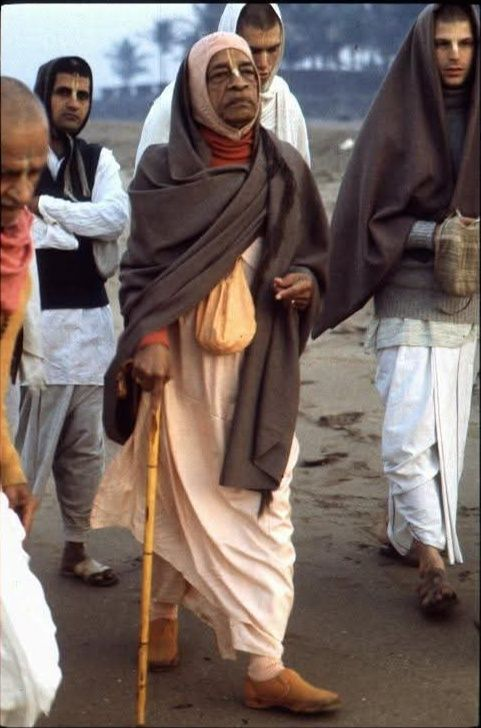
"There is a philosophy which is called karma-mīmāṁsā. Karma-mīmāṁsā means there is no need of making your relationship with God. God is Supreme, accepted, but He is bound to give you the result of your honest work. This is another philosophy. So you work honestly, there is more or less moral principles. If you stick to the moral principle, ethics and morals, then you will be entrapped by the prideness that "Oh, I am very moral. I do not speak lies. I do not steal. I treat with my neighbors very nicely. So I have no necessity to search out father. I am quite all right." That means, this mundane moralist, if you become mundane moralist, or if you become mundane philosopher or if you stick to the ritualistic process of your particular faith, then there is no hope of reaching to the Absolute Truth. Mundane scriptural, ritualistic way and dry speculative philosophy and mundane moralists. Just like Arjuna and his brother. His eldest brother is Mahārāja Yudhiṣṭhira; he was very moralist, Dharmarāja. His name was "the king of religious principles," Dharmarāja. So Kṛṣṇa Himself advised him that "You go to Droṇācārya and tell him a lie, that 'Your son is dead. Your son is dead.' " Now Mahārāja Yudhiṣṭhira, he was a mundane moralist, so "How can I tell lie? How can I tell lie? I have never spoken lie in my life." So there was some argument. Of course this was, fight was, some compromise was made between them in the camp. So he became a mundane moralist. He did not consider that "The Supreme Personality of Godhead, Kṛṣṇa, is asking me to tell lie." So he could not transgress his moral principles so he could not become a devotee of Kṛṣṇa. He (was) considered mundane moralism, so it was not possible for him to become a Kṛṣṇa conscious person. He could not take Kṛṣṇa's order as the Supreme. But Arjuna, in the beginning, he was hesitating to fight and kill his kinsmen, and when he understood that "Kṛṣṇa wants this fight," he decided, "Yes, I shall do." This is Kṛṣṇa consciousness.
Ref. VedaBase => Srila Prabhupada, Śrī Caitanya-caritāmṛta, Madhya-līlā 20.125 -- New York, November 27, 1966