“If Tirtha [Thomas Drescher] takes the whole thing, and no other boys get caught, then he’ll go back to Godhead at the end of this lifetime.”—“His Divine Grace” Kirtanananda Swami “Bhaktipada” (Keith Gordon Ham), the ISKCON zonal acharya at New Vrindaban, known as “Number One.” Here on his vyasasana (throne) at the newly-dedicated RVC temple at New Vrindaban. Publicity photo (1983). |
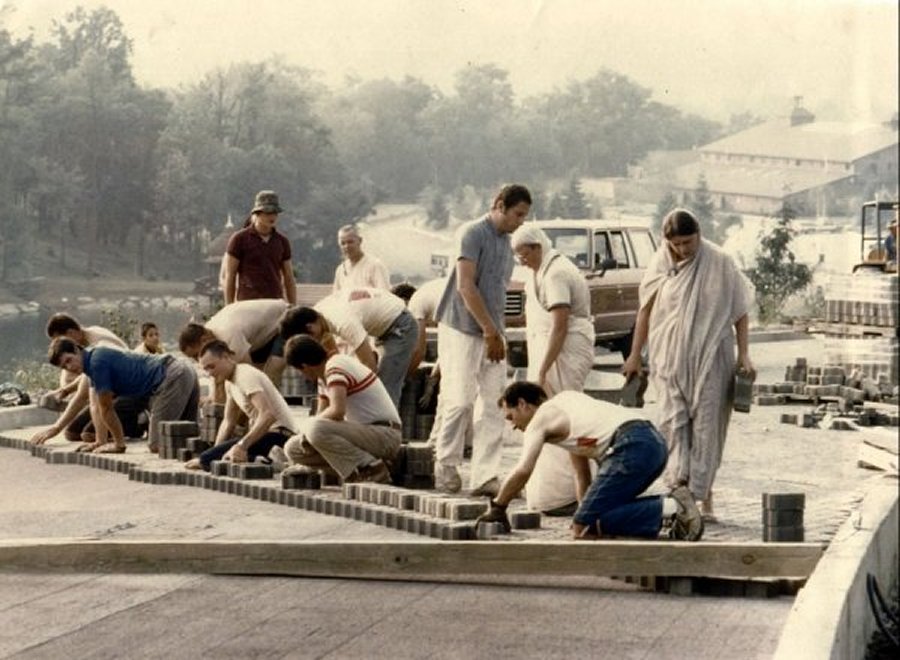 Bhaktipada supervises a road-building brick-laying marathon near New Vrindaban’s RVC temple complex (summer 1985). |
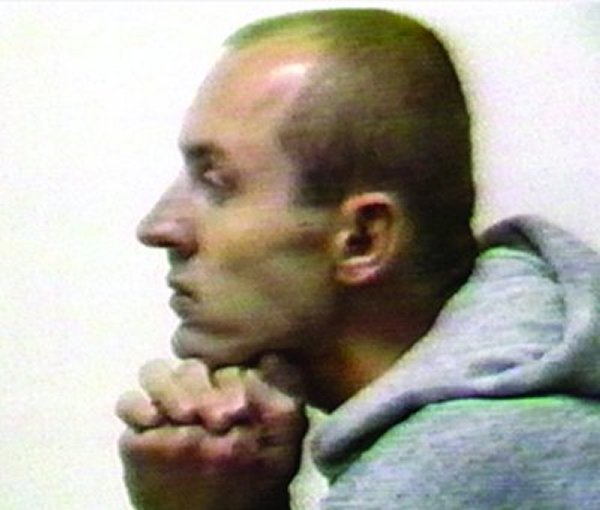
“I felt I had to either kill myself, kill Bhaktipada, or leave.”—Triyogi (Michael Shockman), the mentally disturbed visiting devotee who tried to kill Bhaktipada on October 27, 1985, by smashing his skull with a three-foot-long steel rod reported to weigh twenty pounds. Here at the Marshall County Jail in Moundsville, West Virginia (undated). |
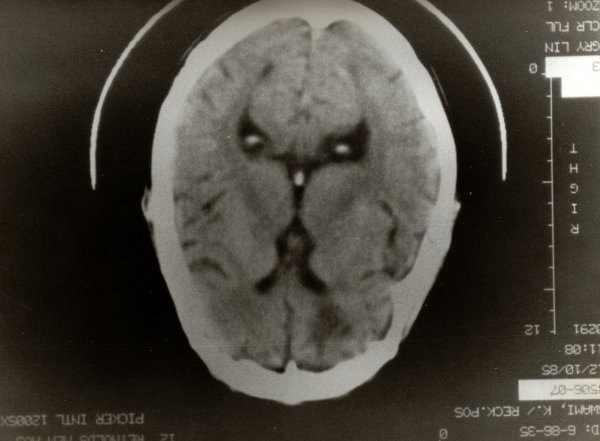
“Every doctor that I talked to said it [the blow on my head] was enough to kill a hundred men. When I was attacked, Krishna absolutely incarnated to protect me. The brain scan, the X-ray, taken just after the accident, showed an unmistakable image of [the half-man/half-lion avatar] Lord Nrsimhadeva [the Great Protector of the devotees]. Krishna incarnated to protect me from the blows of that man.”—Swami Bhaktipada, speaking of the MRI image of a cross section of his brain, which, when turned upside down, resembles a ghastly face. |
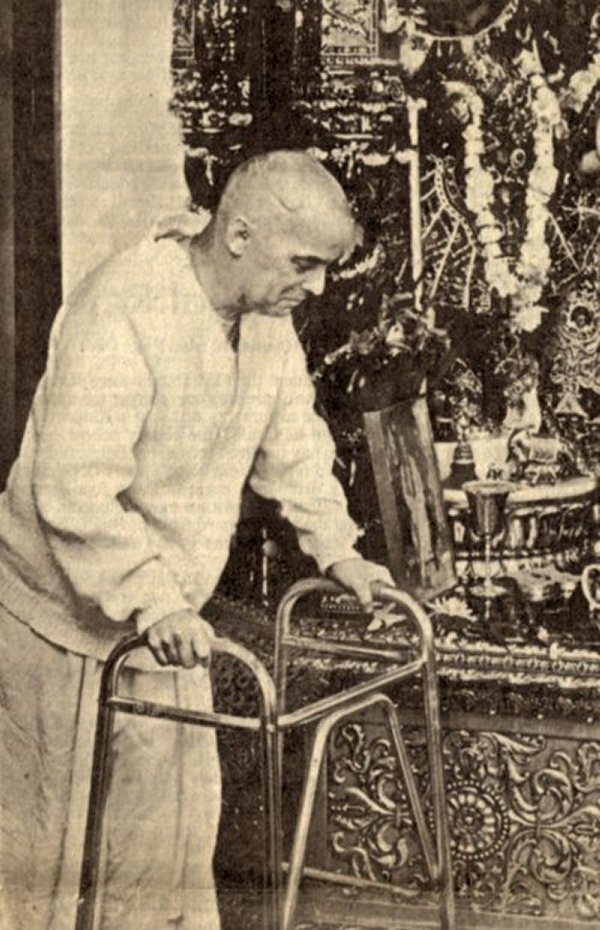
“The assailant [Triyogi] was a crazy madman . . . who had been influenced by Sulochan.”—Bhaktipada, ambulating with great difficulty using a walker, in the temple room at his home (December 4, 1985). He had been ten days in a coma, three weeks on the critical list, and 26 days in the hospital. |
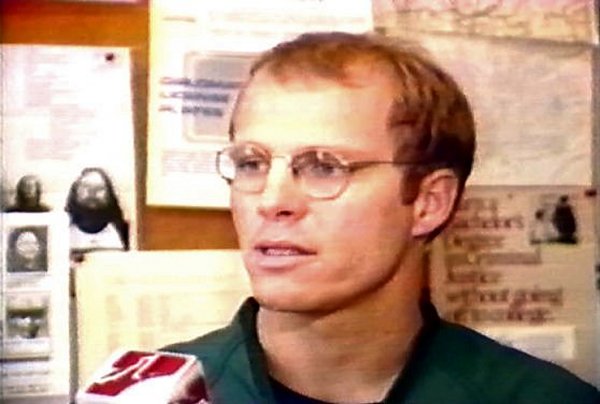
“Mark my words! I’m going to ruin Ham’s reputation, and if that doesn’t work, I'll use a high-powered rifle! And I wouldn’t mind going to prison for it.”—Steven Bryant (Sulochan). Photo taken during a television interview with WTRF Channel 7 (Wheeling, West Virginia) at the Marshall County Jail in Moundsville, West Virginia (September 1985). |
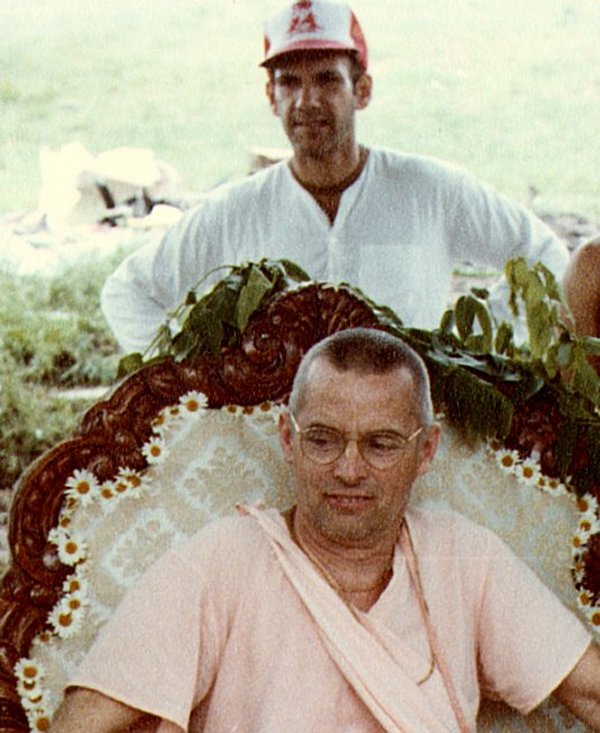
“This guy [Sulochan] is getting out of control. It would be nice if someone would silence him once and for all.”—Hayagriva (Howard Wheeler), Keith Ham’s college roomate, lover, best friend, and co-founder of New Vrindaban. Here with his life-long buddy at a Labor Day Festival at New Vrindaban (September 1984). |
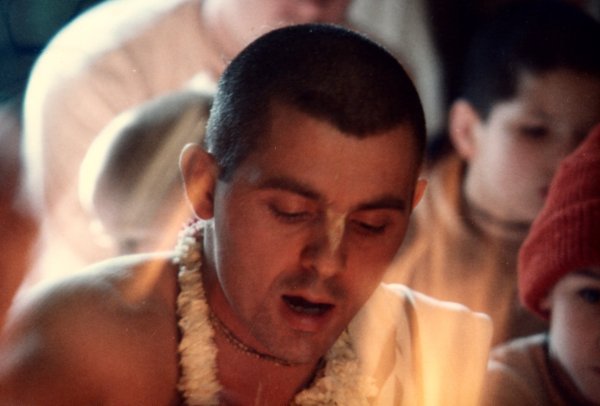
“We have to finish this thing. As long as that guy [Sulochan] is walking around, he’s a threat to Bhaktipada. He won’t be thinking anyone’s after him out in California. At least no one from New Vrindaban. If something happens out there, there won’t be as much heat on us. In time the whole thing will blow over. If everything runs smoothly, they won’t be able to prove anything.”—Kuladri (Arthur Villa), New Vrindaban’s temple president, known as “Number Two.” Here officiating as a priest at a New Vrindaban fire sacrifice (1984). |
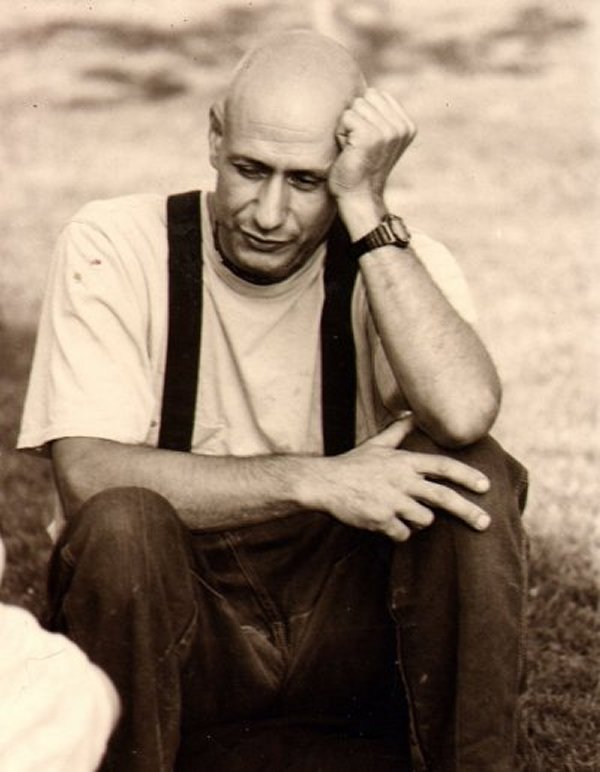
When asked if he had been “involved with the killing of Sulochan,” Tapahpunja Swami boasted, “I engineered it. It was completely Vedic. He offended Bhaktipada.”—His Holiness Tapahpunja Swami (Terry Sheldon), the president of Cleveland ISKCON, at New Vrindaban (undated). |
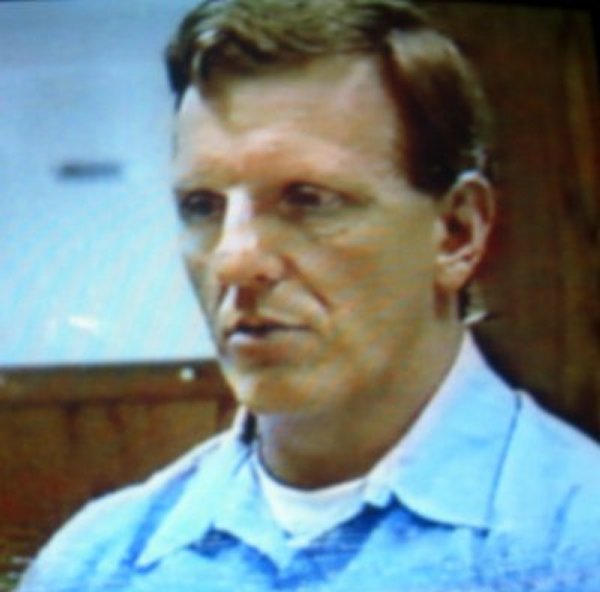
“That son of a bitch [Sulochan] is . . . going to have to be killed, and I am the one that is going to do it.”—Tirtha (Thomas A. Drescher), New Vrindaban’s chief “enforcer” and hit man, in court (undated). |
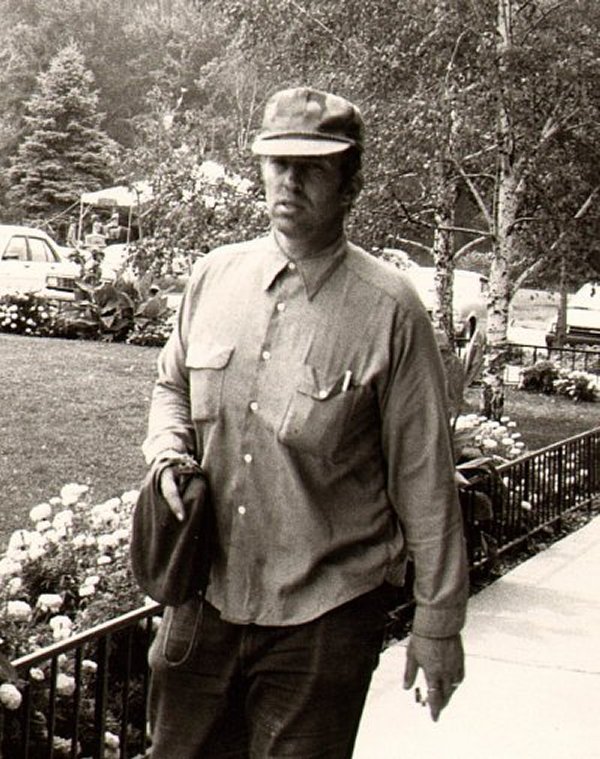
“Even if Kirtanananda Swami had . . . full sex with ten thousand children, he’s still the guru of the universe, and if you don’t accept that, you’re going to hell.”—Janmastami (John Sinkowski), Tirtha’s partner in crime, chanting japa on the sidewalk in the front of the RVC temple (September 1991). |
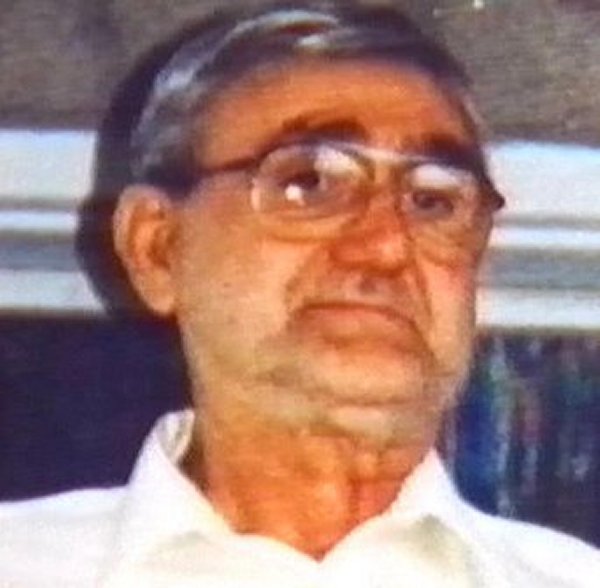
“Gorby was more fired up to destroy Sulochan than any of the devotees.” Russell “Randall” Clark Gorby, retired steel worker, longtime “friend” of New Vrindaban, vocal advocate for the murder of Sulochan, and government informant (undated). |
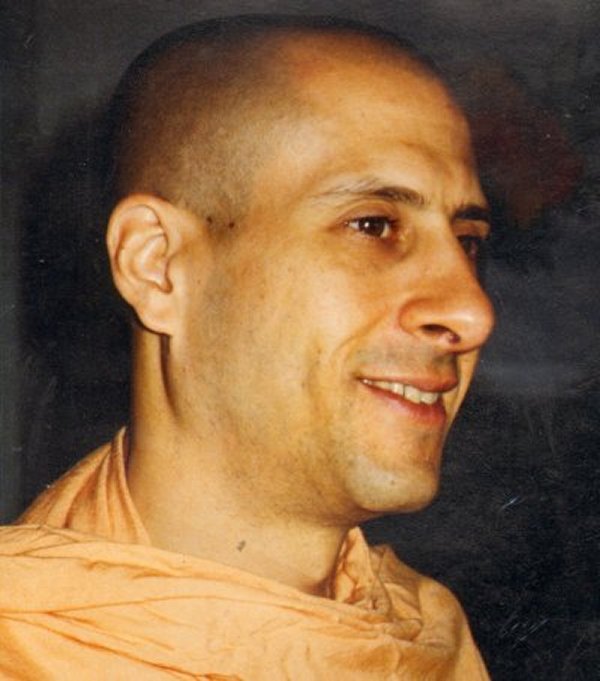
“What was I supposed to do under those circumstances? We were convinced that Bhaktipada was a pure devotee and that Sulochan was determined to murder him, so we thought we were obligated to stop some demon from killing a pure devotee by any means possible.”—His Holiness Radhanath Swami (Richard Slavin), “gentle and humble” sannyasi dearly loved by the Brijabasis (undated). |
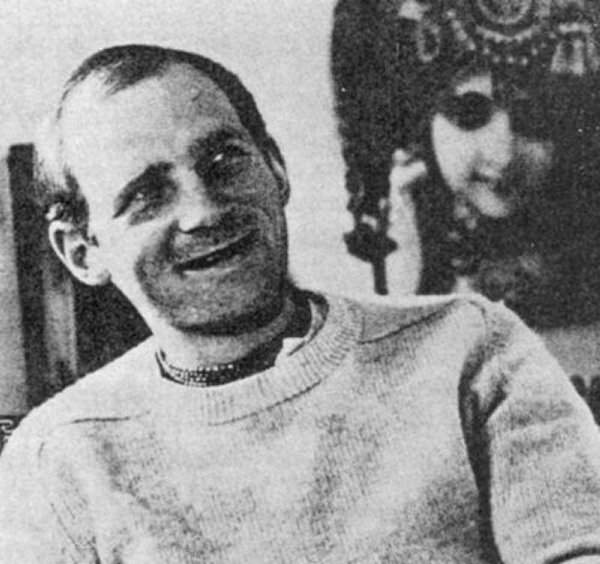
“Radhanath Swami won’t like all this coming out. Too bad. I had to be responsible for my transgressions [and go to prison]. He should do the same.”—Dharmatma (Dennis Gorrick), Director of New Vrindaban’s multi-million dollar “Scam-Kirtan” panhandling operation. Image from Brijabasi Spirit (January-February 1977). |
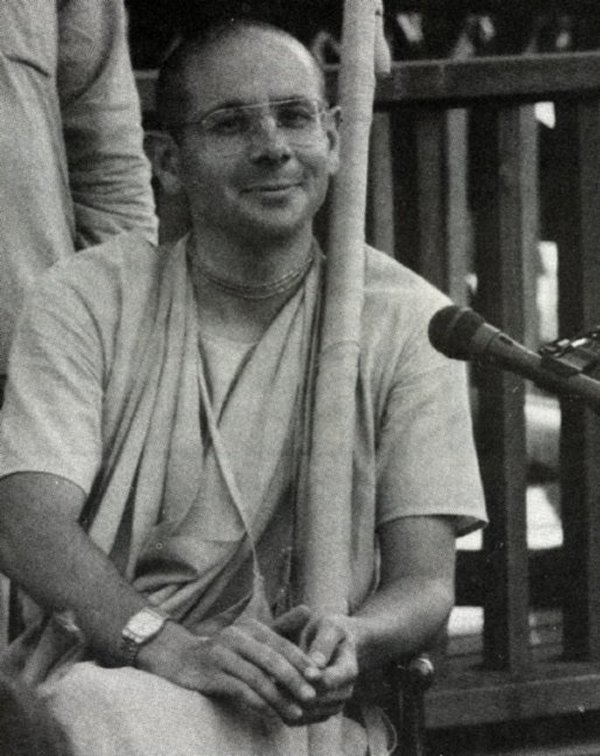
“He [Sulochan] should be transmigrated to his next body.”—“His Divine Grace” Ramesvara Maharaja (Robert Grant), the ISKCON zonal acharya for Southern California and head of the North American BBT, during a rare visit to New Vrindaban. Photo from Brijabasi Spirit (summer 1985). |
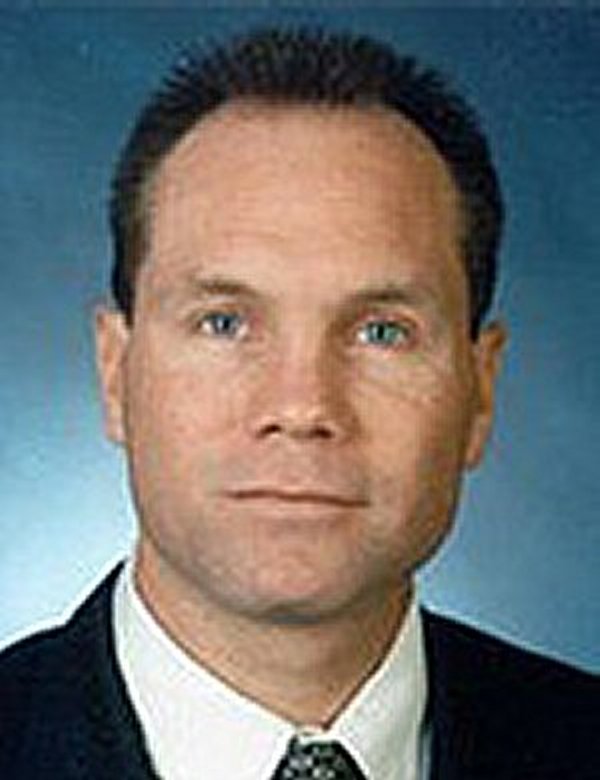
“My guru, Ramesvara, said: ‘K. K., if you ever see Sulochan, call New Vrindaban.’ And because I heard that Sulochan may frequent the area, I kept an eye out for his vehicle.”—Krishna-Katha (Jeffrey Breier), head of security at Los Angeles ISKCON and Tirtha’s assistant. Breier helped hunt down Sulochan and was with Tirtha until moments before the murder. Some say he witnessed the murder. (Undated Linkedin photo, c. 2010) |
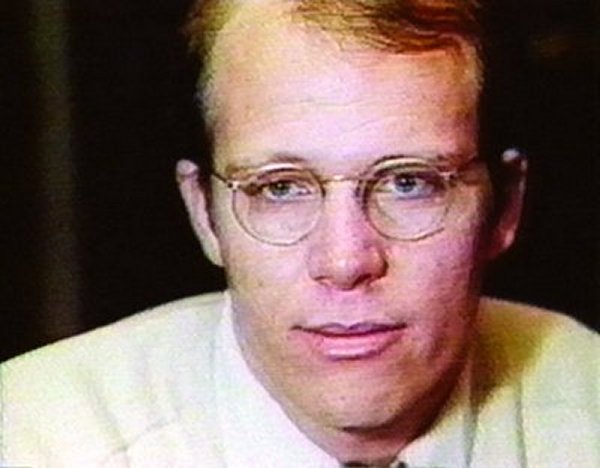 “They are constantly watching me. I know some morning I will go to sleep and not wake up.”—Sulochan (undated) |
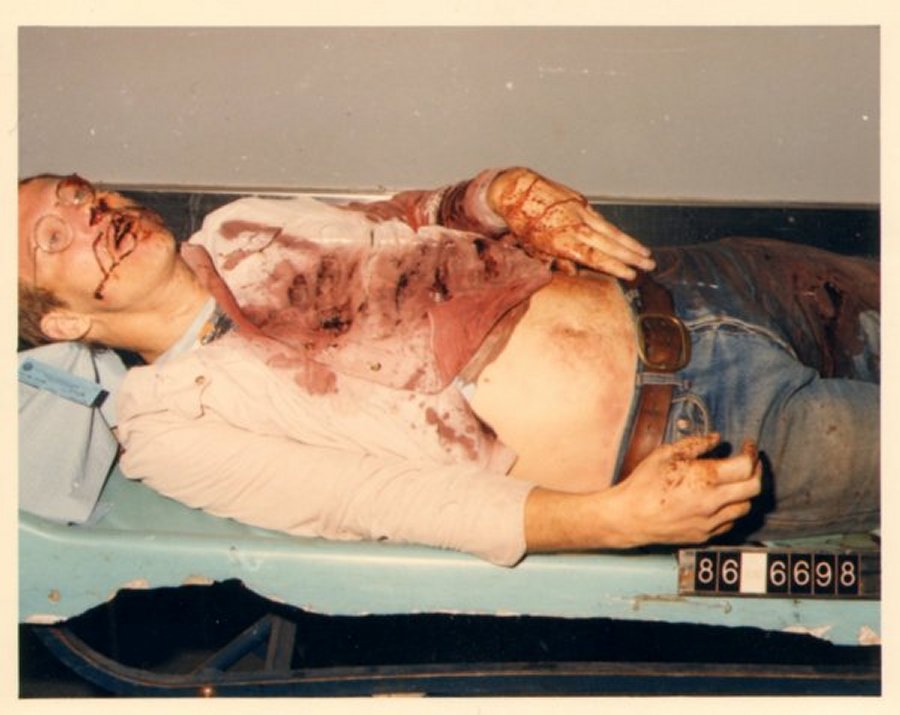 “Upon my death, that’s when everything will unfold. When I die, then everyone will see.” Sulochan’s lifeless body at the Los Angeles morgue (May 22, 1986). |

Comments
May 12, 2019
Subject: Iron Law of Oligarchy
Dear Hrishikesh dasa,
Thank you for all of your thorough research. Your book titled, Killing for Krishna: The Danger of Deranged Devotion is a valuable reference. Also, I like how well-rounded and balanced you are!
ISKCON is basically a case study of the Iron Law of Oligarchy, articulated by Robert Michels. Organizations must create bureaucracy in order to maintain efficiency as it expands. Every group contains individuals that are more committed, motivated, and skilled, both technically and/or politically. This “inner circle” functions as paid administrators, executives, spokespersons or political strategists for the organization. Centralization inevitably occurs. A relatively small number of individuals become highly influential.
The objective of this ruling class is to preserve and increase their power by controlling bureaucratic procedures and decision-making processes. It is unlikely that the rank and file members of the organization would have the ability to hold their leaders accountable—the ruling class controls access to information while creating an incentive structure aimed at rewarding loyalty. In fact to obtain accountability, members would be obligated to appeal to a judicial and prosecutorial system that is external to the organization.
Moreover, it is unlikely that members would even be aware that the inner circle is abusive of its power. Charismatic leaders are often skilled at uprooting their followers’ sense of right and wrong to create a compliant set of disciples, while creating a group mind within their organization. Groups are capable of rationalizing far more heinous crimes than any single individual, were he in a state of isolation.
The behavior of the crowd is emotionally determined, not logically or philosophically determined, allowing a leader such as Bhaktipada to convince his followers that even the most improbable statements are true, or that the most egregious deviations from Srila Prabhupada’s principles are bona fide.
Although ISKCON was not organized as a democratic entity, it is my understanding that ISKCON was intended to be decentralized with local temples wielding considerable autonomy. And strictly speaking, the words “decentralized” and “democratic” are not interchangeable. Nevertheless, the factors that drive an initially democratic organization towards oligarchy are the same factors that transform an initially decentralized organization into a concentrated power structure dominated by a ruling class that becomes increasingly corrupt.
I look forward to hearing from you, and I hope this letter finds you well.
Yours in the Service of Krishna,
Chand Prasad
Maryland, United States
www.biodynamictheology.com
Killing for Krishna: The Danger of Deranged Devotion