Gaura Sundara Das; " Once Srila Prabhupada was sleeping in Vrindavana on a mat, and a spiritual brother asked him, "Why do not you buy a bed?" He replied, " Because I want to invest every penny in the publication of books. "

Gaura Sundara Das; " Once Srila Prabhupada was sleeping in Vrindavana on a mat, and a spiritual brother asked him, "Why do not you buy a bed?" He replied, " Because I want to invest every penny in the publication of books. "
"...a living being in this age is awarded with the results of pious acts simply by thinking of them."
-------------
"The age of Kali is called the fallen age. In this fallen age, because the living beings are in an awkward position, the Supreme Lord has given some special facilities to them. So by the will of the Lord, a living being does not become a victim of a sinful act until the act is actually performed. In other ages, simply by thinking of performing a sinful act, one used to become a victim of the act. On the contrary, a living being in this age is awarded with the results of pious acts simply by thinking of them."
Srila Prabhupada sb/1/18/7


Sharnga Thakur’s Deities were served in the town of Mamagachi. The original Temple was built in front of a bakula tree. The Deities of Radha Gopinath can be seen in this Temple, as can the Deity of Mahaprabhu’s other parshad, Vasudeva Datta Thakur, Shri Madana Gopal. The Devotees who do parikrama of Navadwip Dhama visit this Temple for darshan. Shrila Bhaktisiddhanta Saraswati Goswami Thakur established a Temple not far from the above-mentioned home of Sharnga Murari at the birthplace of Vrindavan Das Thakur. (In the images: from right below to left Shri Shri Radha Gopinath of Sharanga Thakur, Shri Shir Madana Gopal of Vasudeva Datta, Shri Shri Gaura Gadadhara of Puri Goswami, Mamgachi).
vraje nandimukhi yasit sadya saranga-thakkurah
kalah shri-krishnadasa sa yo lavangah sakha vraje
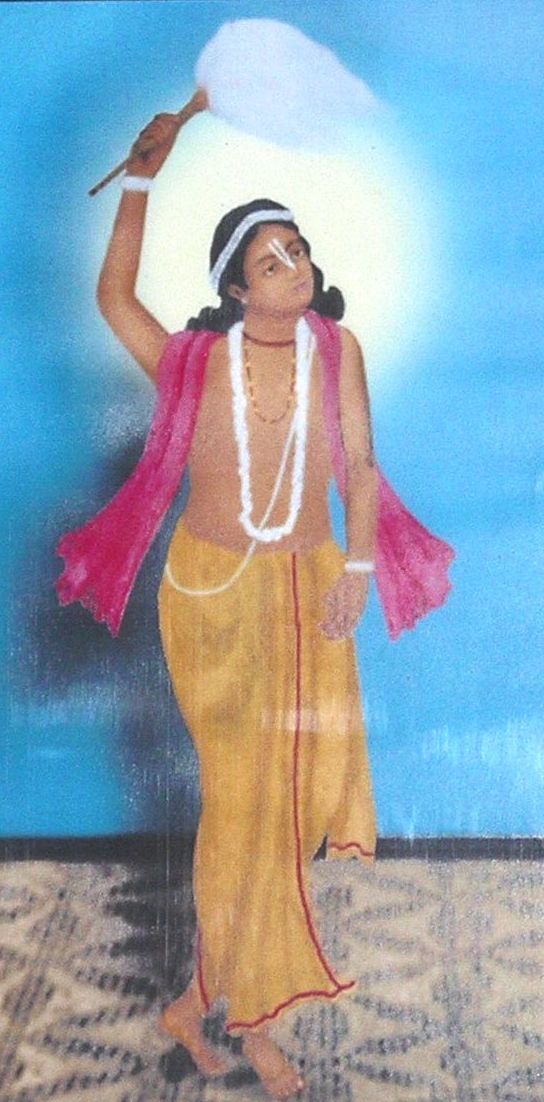
Sri Narahari Sarkar Thakura was born at Sri Khanda. Sri Krsnadasa Kaviraja Gosvami describes that the residents of Sri Khanda formed a branch of the desire tree of love of God. "Sri Khan davasi (the residents of Sri Khanda) Mukunda and his son Raghu nandan were the thirty ninth branch of the tree, Narahari was the fortieth, Chiran Jiva the forty first and Sulocana the forty second. They were all big branches of the all merciful tree of Caitanya Mahaprabhu. They distributed the fruits and flowers of love of Godhead anywhere and everywhere. [Chaitanya Charitamrita Adi-lila 10:78-79] Srila Jagannatha das Babaji Maharaj once stated - "Navadwip is the abode of Goloka. Vrindavana is the abode of Gokula. And Sri Khanda is the abode of Vaikuntha."
Sri Narahari Sarkar Thakura participated in all of Sri Gaurasundora's pastimes. Bhakti Ratnakara states: "Sri Sarkar Thakura's glories are most uncommon. In Braja he is known as Madhumati, whose good qualities are unlimited." (thus proving he was no
"After the time of Sri Caitanya Mahaprabhu, those faithful to Him kept apart from nondevotees, to avoid contamination. Seeing this, the personality of Kali sent his representatives in disguise to pollute the Vaisnava sampradaya. Posing as Vaisnavas, they spread their wicked doctrines, and appeared so intelligent and devoted that only pure devotees could detect their real identity. Most devotees -- not only the most neophyte – were enchanted by their tricks. In this way Kali's agents expertly introduced karma, jnana, and anyabhilasa in the Vaisnava sampradaya and caused suddha-bhakti to vanish from the world." (Sajjana Tosani 18.2.13-14 (1915) taken from Hare Krishna Festivals: What Srila Prabhupada Said
BY: SUNANDA DAS

According to Vedic civilization, unmarried girls from ten to fourteen years of age are supposed to worship either Lord Śiva or the goddess Durgā in order to get a nice husband. But the unmarried girls of Vṛndāvana were already attracted by the beauty of Kṛṣṇa. They were, however, engaged in the worship of the goddess Durgā in the beginning of the hemanta season (just prior to the winter season). The first month of hemanta is called Agrahāyana (October-November), and at that time all the unmarried gopīs of Vṛndāvana began to worship goddess Durgā with a vow. They first ate haviṣyānna, a kind of foodstuff prepared by boiling together mung dahl and rice without any spices or turmeric. According to Vedic injunction, this kind of foodstuff is recommended to purify the body before one enacts a ritualistic ceremony. All the unmarried gopīs in Vṛndāvana used to daily worship goddess Kātyāyanī early in the morning after taking bath in the River Yamunā. Kātyāyanī is another name for goddess Durg

This is the celebration of the marriage ceremony of Srimati Tulsi Devi and Lord Sri Krishna.
Marriage of Shalagrama and Tulasi written by Sri Padmanabha Gosai.
Shri Vasishthaji said that what I have heard in ancient times from Lord Brahma about the marriage of Tulasi I will now describe according to what is written in the Narada-pancaratra. First one should plant Tulasi either in the house or the forest, and after three years one may perform her marriage. The auspicious times when one may perform the marriage of Shalagrama and Tulasi are described as follows. When the sun is moving in the north, Jupiter and Venus are rising, in the month of Kartika, from the Ekadashi to the full moon in the month of Magha, and when constellations that are auspicious for marriage appear, especially the full moon day. - First one should arrange a place for sacrifice (yajna-kunda) under a canopy (mandapa). Then after performing shanti-vidhana, one should install sixteen goddesses, and do the shraddha ce
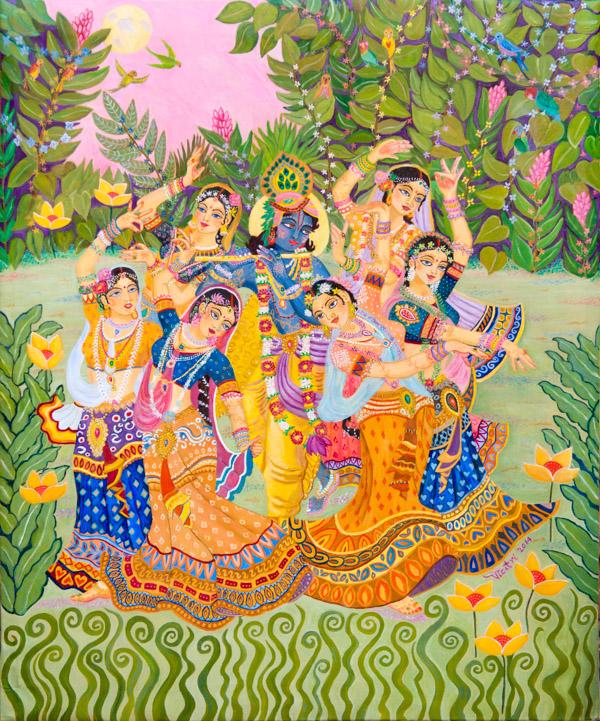
The purnima or full moon of Damodara month is the second full moon of the autumn season, and rasa lila is again celebrated. This second rasa yatra is celebrated more in Bengal, whereas the first one is celebrated more in Vrndavana.
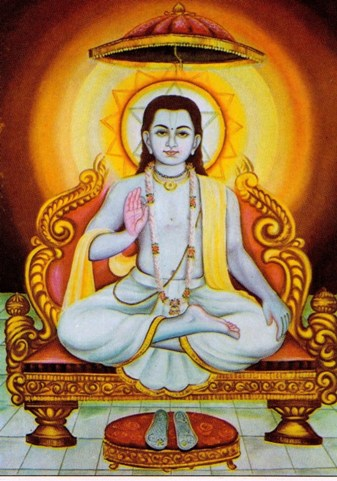
Sri Nimbarka Acarya comes in the line of the Kumara Sampradaya and is believed to have lived around the 11th and 12th centuries. Born in the modern Murgarapattam in the southern Dravidian province, he was the son of Aruni and Jayanti, a very pious brahman a couple of the Tailanga order.
He was a great ascetic of the Tridandi order. He wrote many books according to the Dvaitadvaitavada and he lived most of his devotional life at a place called Nimbagrama near Govardhana at Vrindavana.
While at Nimbagrama, he defeated a great Jain pandit in a discussion. The Jain had refused to dine with him saying that the Sun had already set and so he would not take any food. At this, Nimbarka by his own potency made the sun appear from a Nimba tree and the astonished Jain accepted his hospitality. It is said that his name Nimbarka or Nimbaditya has been derived from this miracle of Aditya or Arka meaning sun from a nimba tree.
Once in a village near the forest of Bilva Paksha, a group of brahmanas

This kind of 5 day fast is also prescribed for the last 5 days of Kartika (Damodara) Month and it is known as "Bhisma Pancaka". During that vrata puja offerings to the Lord are also prescribed. I am listing them below. There are also mantras that go with these offerings. However, I didn't find any specific mention about this for Purusottama month. In the Padma Purana it only stated that in addition to ekadasee one can observe a "pancaratrika" fast until amavasya. Here are offerings prescribed for Bhisma Pancaka.
Devotees may offer the following to the Deity form of the Lord:
1. On the first day, one must offer padma (lotus) flowers to the feet of the Lord
2. On the second day, one must offer bilva (wood-apple) leaves of the thigh of the Lord
3. On the third day, one must offer gandha (scents) to the navel of the Lord
4. On the fourth day, one must offer java flower to the shoulders of the Lord
5. On the fifth day, one must offer malati flower to the head (siro-desa) of the Lord
David Sherk Gadai Dasa; Purport: Also by His Divine Grace
pura vrindavane cetau sthitau bhringara-bhangurau
Kas
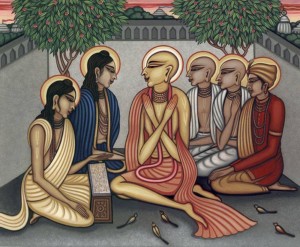
Lokanatha Goswami was known as Lila Manjari in Krishna lila.
Bhugarbha
Gauranga Prema Dasa Bhagavad-gita
3.20 Purport
...violence is also necessary
in a situation where good
arguments fail.
Morning walk,
January 21,
1976
Srila Prabhupada: We are not
nonviolent. We are violent to
the mudhas.
Morning Walk MARCH
15, 1974 VRNDAVANA
Prabhupada: When there will be military march of Krsna
conscious soldiers . . . we have to kill this civilization of
mudhas [fools] . . . those who are mudhas, we have to
kill them. This is our business. Kill all the mudhas. . .
Not now, but later when we are more powerful.

Gauranga Prema Dasa Becasue Srila Prabhupada's
orders are being blantantly
and offensively disobeyed,
this is indubitably our duty:
Srila Prabhupada Letter
to Niranjana, August 29,
1972:
......there is offensive behavior
to the pure devotees you may
become like Nrsimhadeva
and punish them severely.
Srimad-Bhagavatam
[Canto 4, Ch. 14
Text 32]
Purport
One should not at any time tolerate blasphemy
and insults against devotees......a pure devotee
immediately be
Money is NOT the honey
"Brahmana cannot accept any salary. Just like you have accepted me as your acarya, but you do not pay me any salary. This is forbidden. The teacher will not accept salary. Then he comes down to the sudra platform. The sudra accepts salary. I serve you, you pay me. And the brahmana will distribute knowledge freely, and the ksatriya will give protection to the brahmana. This is the Vedic system. Even in fifty years ago, education in India, there was no charges. A learned brahmana will sit down in corner of a neighborhood and all the children will come there. They will learn primary education. And the parents of the children will send, somebody will send rice, somebody will send dal... Just like we are maintaining, by collecting. Not here, but in Bombay, our centre is collecting and distributing.
"The whole system was that. Love exchange. I give you some service; you give me something, out of your love.
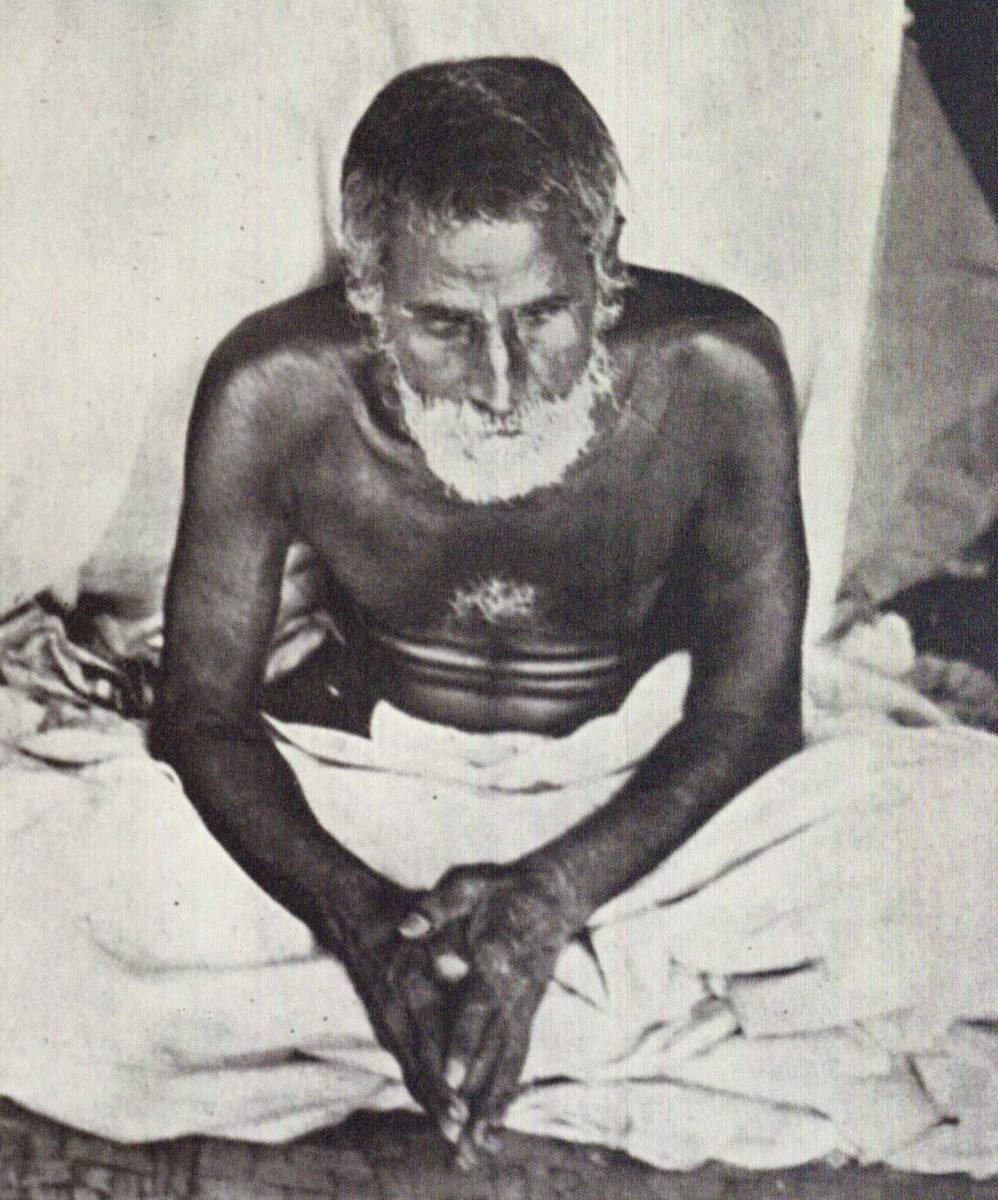
This excerpt from the biography of Srila Gaura-kishora Dasa Babaji, written by Srila Bhaktisiddhanta Saraswati Goswami, gives clear insight into the qualifications and activities of a pure Vaishnava (devotee of Vishnu, or Krishna).
How Can I Know a Vaishnava?
Once one person approached Srila Gaura-kishora dasa Babaji and asked, "We see many descriptions of the devotees of the Lord in the Bhagavad-gita, Srimad Bhagavatam and other scriptures which are of the highest order. But these narrations do not have any real counterpart with the persons we see today who are called Vaishnavas. Sometimes we see these persons [act in ways] opposite of the persons described. Therefore, very mercifully instruct us as to how we can, without a doubt, identify the real devotees of the Lord."
Gaura-kishora dasa Babaji Maharaja replied, "When the desire of the devotee of the Lord is in direct conjugation with the desire of Krishna, then the compassionate pure devotee of the Lord, regardless of birth, tim

This kind of 5 day fast is also prescribed for the last 5 days of Kartika (Damodara) Month and it is known as "Bhisma Pancaka". During that vrata puja offerings to the Lord are also prescribed. I am listing them below. There are also mantras that go with these offerings. However, I didn't find any specific mention about this for Purusottama month. In the Padma Purana it only stated that in addition to ekadasee one can observe a "pancaratrika" fast until amavasya. Here are offerings prescribed for Bhisma Pancaka.
Devotees may offer the following to the Deity form of the Lord:
1. On the first day, one must offer padma (lotus) flowers to the feet of the Lord
2. On the second day, one must offer bilva (wood-apple) leaves of the thigh of the Lord
3. On the third day, one must offer gandha (scents) to the navel of the Lord
4. On the fourth day, one must offer java flower to the shoulders of the Lord
5. On the fifth day, one must offer malati flower to the head (siro-desa) of the Lord
Some odd ritviks think; there is a new line of Acaryas, just like the old line, but ritvik, to replace Srila Prabhupada. Ritvik Acarya. or Hansadutta etc.
Spirinet ; Every bonafide follower of Srila Prabhupada is an acarya, siksha guru, and can act as a ritivk priest, if approved by other bonafide Srila Prabhupada disciples, or in emergency as required, for the only Jagada-guru Diksha-Acarya, HDG. Srila Prabhupada.

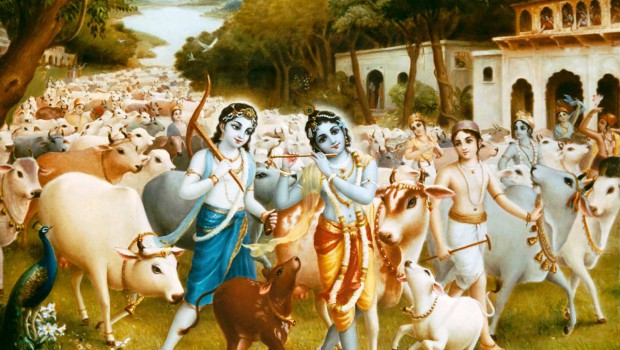
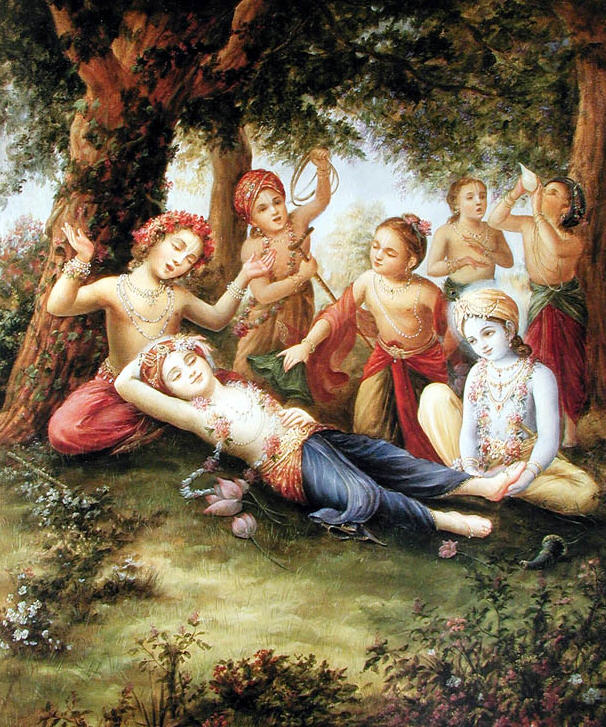
On this day lord Sri Krishna became a qualified cowherd. Before this day, he was a keeper of the calves.
The Killing of Dhenukasura:
"Thus Sri Krishna, along with His elder brother Balarama, passed the childhood age known as kaumara and stepped into the age of pauganda, from the sixth year up to the tenth. At that time, all the cowherd men conferred and agreed to give those boys who had passed their fifth year charge of the cows in the pasturing ground. Given charge of the cows, Krishna and Balarama traversed Vrindavana, purifying the land with Their lotus footprints."
It is stated in the Kārttika-māhātmya section of the Padma Purāṇa:
śuklāṣṭamī kārttike tu
smṛtā gopāṣṭamī budhaiḥ
tad-dinād vāsudevo 'bhūd
gopaḥ pūrvaṁ tu vatsapaḥ
"The eighth lunar day of the bright fortnight of the month of Kārttika is known by authorities as Gopāṣṭamī. From that day, Lord Vāsudeva served as a cowherd, whereas previously He had tended the calves."
The word padaiḥ indicates that Lord Kṛṣṇa blessed
