All Posts (4112)
Sort by

Here Sripad Aindra Prabhus quotes :
"Let the over-intelligent, doggedly resorting to materially contrived managerial stratagems, injudiciously undermine the essential principle of keeping single-minded confidence in the lucid instructions of the institutional Founder-acarya; they’ll have to learn the hard way – as will the attendantly implicated!
Let hundreds of heedless sannyasis and guru-figureheads plunge from their pompous pedestals owing to their often sentimentally justified, inappropriately frequent, and overextended proximity in dealings with their female disciples and so on. Why should we lament or bother ourselves to in any way condemn or condone; these things are going on – and on – and will continue to go on and on and on . . . Trust no future however pleasant.
Let the upper-organizational oligarchy essay to save face by repeatedly rehashing their clandestine attempts to cloak the pitiable transgressions of the institutionally rubberstamped
gurūn ahatvā hi mahānubhāvān
śreyo bhoktuṁ bhaikṣyam apīha loke
hatvārtha-kāmāṁs tu gurūn ihaiva
bhuñjīya bhogān rudhira-pradigdhān
(BG 2.5)
(break)
(01:01)
"It is better to live in this world by begging than to live at the cost of the lives of great souls who are my teachers. Even though they are avaricious, they are nonetheless superiors. If they are killed, our spoils will be tainted with blood."
Prabhupāda: Hm. So the first problem was, for Arjuna, how to kill the kinsmen, family men. Now, when he was chastised by Kṛṣṇa as a friend, that "Why you are so weak? Don't be weak. This is sentiment. This kind of compassion is sentiment. Uttiṣṭha. You better get up and fight..." But we can... If I do not want to do something, I can offer so many pleas. You see? So next he is presenting, gurūn: "All right, Kṛṣṇa, You are talking about my kinsmen. I accept that it is my weakness. But how do You advise me to kill my guru? Droṇācārya is my guru. And Bhīṣmadeva is also my guru. So do You
Drstadyumna Swami, Jew, CIA family.
Adi Kesva, CIA family, active poisoner
Jayapataka Swami, Jew, complicit
Tamala Krsna Swami, Jew, main agent of the murder, active poisoner
Bhavananada, Jew, complicit and also main agent of the murder, active poisoner
Bhakti Caru, complicit, active poisoner
Jayadavita, complicit, Jew. ...
Add others if you have such knowledge. There is physical evidence against all of them, and much more.
William Arz ; Srila Prabhupada: "So Kṛṣṇa has enemies. Arisudana. And He has to kill them. Kṛṣṇa has got two businesses: paritrāṇāya sādhūnāṁ vināśāya ca duṣkṛtam [Bg. 4.8]. Miscreants... They are miscreants. The demons who challenge Kṛṣṇa, who want to compete with Kṛṣṇa, who want to share with the property of Kṛṣṇa, they are all enemies of Kṛṣṇa, and they should be killed.....So real guru is never to be killed, but the so-called guru has to be killed. The so-called, pseudo guru, false guru, he should be killed." Bhagavad-gita 2.4-5 -- London.
"Unfortunately, when the acarya disappears, rogues and nondevotees take advantage and immediately begin to introduce unauthorized principles ............The acarya, the authorized representative of the Supreme Lord, establishes these principles, but when he disappears, things once again become disordered."
(Srimad-Bhagavatam 4.28.48, purport)
Quote -From SB-By His Divine Grace AC Bhaktivedanta Swami-Srila Prabhupada ----
"Unless one takes shelter of a bonafide, fully Krsna conscious spiritual master,
there is no chance of understanding Krsna... ....Only one who has surrendered to a pure devotee of Krsna can understand Krsna." [SB 7-5-32]
"Unless one is initiated by a bonafide spiritual master, ALL his devotional activities are USELESS.
A person who is not properly initiated can again descend into the animal species." [Madhya Lila 15 ].
GBC chastity leader is Ex escort agency manager
This my email letter to Malati “prabhu”, ISKCON top official who is ex escort agency manager. It seems she is currently in charge for ISKCON chastity. If some sannyasi writes book which is “too chaste”, she will make sure that book is banned. Also, on her farm, she is letting the girls dance half naked which is the real direction in which ISKCON should go.
In the coming weeks, I’ll will write emails to all GBC body members and create “brothel manager supporter” list.
Message-ID: <CAHEdfkH82OVGwuu3DPfpJeUzSgziz34f1NoWObGuW3gOcz0XTQ@mail.gmail.com> Date: Wed, 01 Mar 2017 11:21:31 +0000 Subject: protecting the movement from harm From: Hanuman das To: "malati.acbsp@pamho.net" <malati.acbsp@pamho.net> Dear Malati “prabhu”, I heard that you desire to be addressed as prabhu, please correct me if I am wrong.
Please accept my humble obeisances.
All glories to Srila Prabhupada.
You have writt
ITSACON is a divided and conquered front for the CIA Jew World Order.
Jew World Order /CIA/ Rothschildes murdered Prabhupada.
Rahm Emmanuel and Radhanath Swami; both come from Jewish Chicago mafia families.


Pablo Deimundo
Translated from Spanish
That's right.... they are from the lodge... no doubtSee Original


Srila Prabhupada was murdered by the CIA/Rothschildes/Jew World Order.
Srila Prabhupada's ritvik instruction: ritvik representative of the acharya
Srila Prabhupada: "I have selected you among eleven men as 'rittvik' or representative of the acharya, to give initiations, both first and second initiation, on my behalf. ".....Make your own field and continue to become ritvik and act on my behalf." (Letter to Hansadutta July 10th /31st 1977)
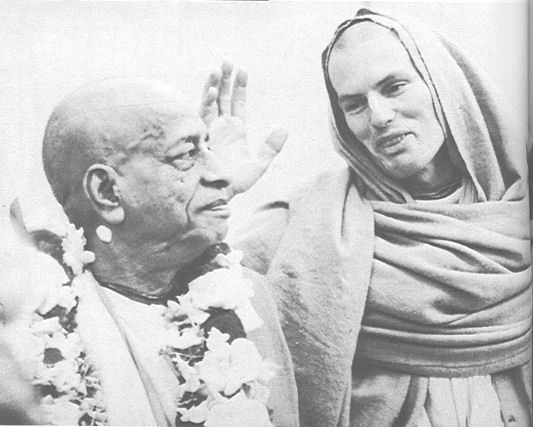 Letter to Kirtanananda
Singapore, 2. October 1993
Dear Kirtanananda Maharaj
Please accept my humble obeisances.
I thought now is the time to remind you of what you said to me upon meeting you at New Vrindaban after my fall from Guru and Sannyas. Seeing my condition, and anticipating the ensuing chaos and confusion amongst the new disciples, you said, "This is why I suggested so strongly that ISKCON should adopt the RITTVIK process of initiation for the new Gurus!" It has been a long time since then, but after all is said and done, I have personally realized the truth of this statement.
Rittvik representatives is all t
Purushottama Dasa Thakura
“The twenty-third and twenty fourth prominent Devotees of Nityananda Prabhu were Sadashiva Kaviraja and his son Purushottama dasa, who was the tenth gopala. Since birth, Purushottama dasa Thakura was merged in the service of the lotus feet of Lord Nityananda Prabhu, and he always engaged in childish play with Lord Krishna.” – Krishnadasa Kaviraja Goswami
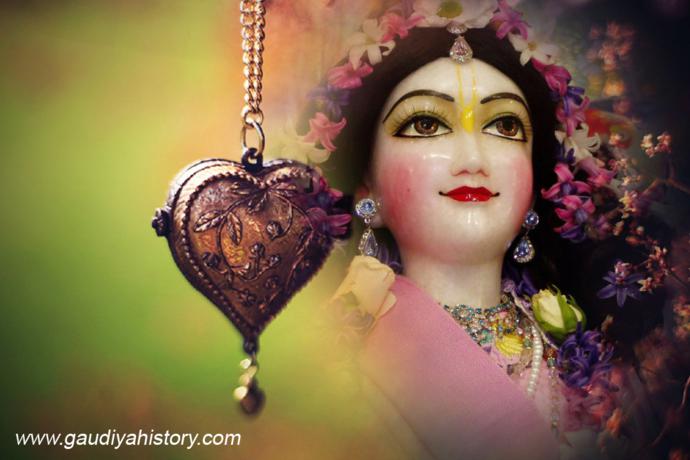
“Sadashiva Kaviraja was greatly fortunate. His son was named Shri Purushottama dasa. Purushottama dasa Thakura had no concern for his external body; Shri Nityananda Prabhu always resided within the core of his heart.” (Chaitanya Bhagvat Antya 5.741-742) (In the wallpaper: Shri Nityananda Prabhu, ISKCON Hungary, New Vraja Dham).
“Sadashiva Kaviraja was greatly fortunate. His son was named Shri Purushottama dasa. Purushottama dasa Thakura had no concern for his external body; Shri Nityananda Prabhu always resided within the core of his heart.” (Chaitanya Bhagvat Antya 5.741-742)
“Sadashiva Kaviraj was a gr
Someone Has Poisoned Me - HareKrsna.org
www.harekrsna.org/gurupoison/support/nityananda.htm
by Nityananda das, © 1999 New Jaypur Press ... Because most people have heard of the poison issue via the rumor mill, the ... Instantly, my conscience screamed at me: "You must publish the evidence on the poisoning of Srila Prabhupada
Srila Prabhupada: Someone Has Poisoned Me
www.iskcon-truth.com/poison/prabhupada-poisoned-overview.html
Someone Has Poisoned Me - BY: NITYANANDA DAS. Srila Prabhupada's Poisoning by Arsenic Someone Has Poisoned Me · Download complete book as ...


Rasikananda Prabhu preached Krsna consciousness in northern Orissa after the disappearance of Lord Caitanya. He was the principal disciple of Syamananda Gosvami.
Accepting the order of his guru, Sri Syamananda, on his head, Rasikananda preached the message of Sri Gaursundar in the world for approximately 16 years. Thereafter he entered into his eternal pastimes through the lotus feet of Gopinatha at Remuna. On the first day of the bright fortnight in the month of Phalguna, Sakabda 1574 (1652AD), Rasikananda quietly slipped out of the village Santa without anyone's notice and walked to Remuna. Arriving there, he discussed Krsna-katha with the devotees there for a while and instructed everyone to serve Sri Krsna with devotion. Then, after requesting them to begin sankirtana, he entered the temple of Sri Gopinatha, and after touching Kshira-chora Gopinatha's lotus feet, which bestow complete fearlessness, he entered into their ultimate shelter.
Rasikananda prabhu’s samadhi is at the Templ
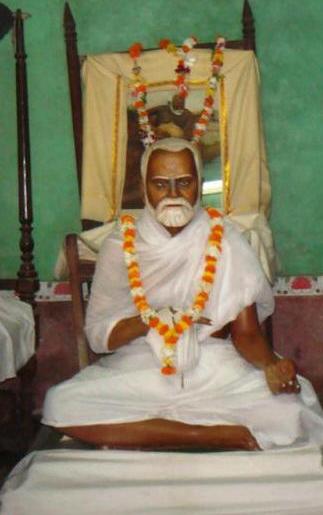
"I offer my respectful obeisances to Jagannatha dasa Babaji Maharaja, who is respected by the entire Vaishnava community and who discovered the place where Shri Chaitanya Mahaprabhu appeared." (In the image: Shrila Jagannatha Dasa Babaji Mharaja).
gauravirbhava-bhumes tvam, nirdestha saj-jana-priyah
vaishnava-sarvabhaumah shri-jagannathaya te namah
"I offer my respectful obeisances to Jagannatha dasa Babaji Maharaja, who is respected by the entire Vaishnava community and who discovered the place where Shri Chaitanya Mahaprabhu appeared."
Shri Jagannatha Dasa Babaji Maharaja was born in the Mayamansingh district of West Bengal. Gaudiya Vedanta-acharya Shri Baladeva Vidyabhushana had a disciple named Uddhava das. His disciple was Shri Madhusudana Dasa Babaji who lived in Suryakunda. Madhusudana Dasa Babaji's disciple was Jagannatha Dasa Babaji Maharaja.
Jagannatha Dasa Babaji lived in Vrindavan and performed his bhajan there for quite some time. He became famous among the Devotee
Demons have communications problems. The devotees of Godhead have immediate connections, as Godhead is all-pervasive, whereas even the best of demons is strictly limited and localized, and so communications among them have to go through lengthy and often unresponsive procedures and channels to occur.

While Godhead knows the needs and necessities of every situation well, the demons at best use their limited intelligence and capacities, and so by Grace they are readily defeated by Godhead.

