All Posts (4077)

Sort by

Rukmini Dvadasi

12.jpg

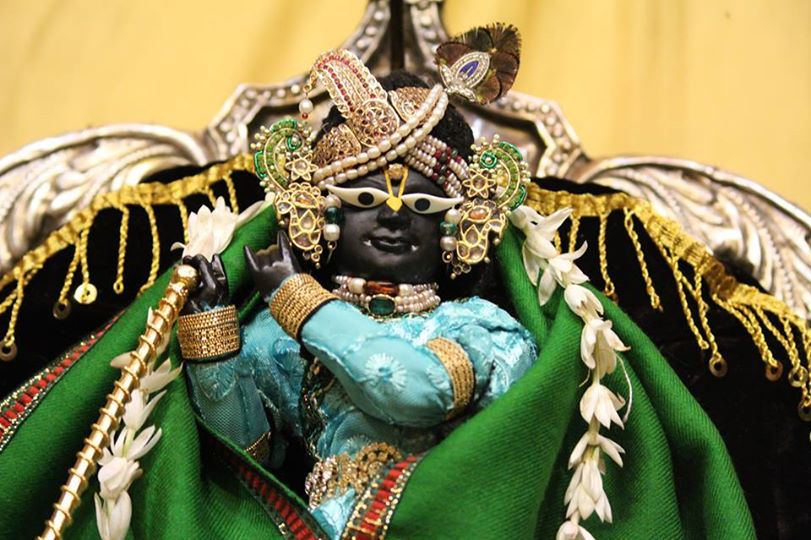
Sri Rukmini Vitthal from Pandharpur Temple


Sri Rukhmini Dwadasi, is observed as the birthday (the day Rukmini Devi appeared on earth) of Rukmini, the consort of Lord Krishna.

The love story of Rukmini and Lord Krishna and their elopement is one of the most famous stories associated with Lord Krishna. Rukmini Dwadashi is observed on the twelfth day of the Shukla Paksha (waxing phase of moon) of Vaisakh month (April – May). It is believed that those who offer worship prayers and pujas with flowers will have their wishes fulfilled.

Prayers dedicated to Rukhmini Devi are held on the day at Lord Krishna Temples. Special pujas are held at the Dwarkadish Temple in Mathura on the day.

Message of Rukmini

O the infallible and the most handsome One! Having heard Your qualities, which enter through the path of ears and absolve away the pains of life, and having heard about Your handsome appearance, which is the only asset of the eyes of living beings with eyes, my heart is accepting You as a consort l

Read more…
Views: 47
Comments: 1

Sri Madhu Pandit - Disappearance Day

9468769682?profile=originalThere is no mention of Sri Madhu Pandit in Caitanya Caritamrta. Only it is mentioned in Bhakti Ratnakar that Sri Gopinathji manifested Himself before Him. [B. R. 2.473]

Oh Srinivas! What more can I say? The Lord reveals Himself to his pure devotee, who then preaches his glories to the world. Who can describe their incomprehensible activities by which the Lord becomes subservient to their love. Thus did Sri Brajendra Kumar reveal himself to Paramananda Bhattacarya and Sri Madhu Pandit, who is the abode of many wonderful qualities.

"Thus has Sri Gopinathji, who is an ocean of mercy, and who sports on the enchantingly beautiful banks of Bansibat, become manifested by the grace of Sri Madhu Pandit." [Sadhan Dipikayam]

Thus Sri Madhu Pandit became the servant of Sri Gopinath, whose bodily luster steals away the minds of everyone. Hundreds and thousands of people came running to see Him, famed as He is as sweetness personified. When the soothing sweetness and coolness of his charming form

Read more…
Views: 19
Comments: 0

JAHNAVA MATA Appearance

Jahnava Mata

"...You are Nityananda-sakti, the divine energy of Lord Nityananda Himself. You are the guru of Krishna bhakti. Be merciful to me and grant me the shade of your lotus feet, which are like a desire tree. You have delivered countless abominable sinners. Please deliver me in the same way. Today, praying for your mercy, this lowly sinner falls at your holy feet." (In the image: Jahnava Mata).

   Shri Nityananda's two wives, Shri Vasudha and Shri Jahnava Devi, are expansions of Lord Balarama's eternal consorts Varuni and Revati. After the disappearance of the Pancha-tattva and many of Lord Chaitanaya's eternal associates, a huge sankirtana festival was held in Kheturi on Gaura-Purnima. Thousands of Lord Gauranga's followers such as Narottama, Shyamananda, Shrinivasa, Vrindavana Dasa, Murari Chaitanya, Parameshvara, and Miniketana Rama attended the first Kheturi Sankirtana Mahotsava.

   They celebrated Gauranga's appearance day with thunderous chanting, exuberant dancing, tasty Prasadam. Six s

Read more…
Views: 36
Comments: 0

9468777891?profile=original


Srimati Sita Devi

Srimati Sita Devi is the daughter of the Earth goddess, Bhumi Devi, and central figure of the Ramayana. InMaharishi Valmiki's own words, Ramayana is known as the noble story of Sita "Sita-ayah Charitam Mahat".

Her glories are sun by the poet-saint Thyagaraja in his "Sri Janakatayane"

Oh daughter of Janaka, the blessed souls of refugees! Oh Consort of Sri Raghu Rama, bedecked with shining gem-ornaments! Pray, protect me always! You are the wind that destroys the clouds of demons like the hundres-headed Ravana; You are the indweller in the hearts of the devotees; Your Feet shine with the lustre of gems set in the crown of Indra.

King Janaka was the wise and benevolent King of Janakpuri and although a great saintly king he was childless. 'Rajarshi - a king who lives like a sage: that was how king Janaka of Videha dynasty was renowned. He ruled over the kingdom of Mithila. He looked upon his people with love and affection.

The Finding of Sita Devi in a casket in the E

Read more…
Views: 25
Comments: 0
9468785870?profile=originalcourtesy B. Radha Govinda Swami;  SB 6.10.9
If one is unhappy to see the distress of other living beings and happy to see their happiness, his religious principles are appreciated as imperishable by exalted persons who are considered pious and benevolent.
PURPORT
One generally follows different types of religious principles or performs various occupational duties according to the body given to him by the modes of material nature. In this verse, however, real religious principles are explained. Everyone should be unhappy to see others in distress and happy to see others happy. Ātmavat sarva-bhūteṣu: one should feel the happiness and distress of others as his own. It is on this basis that the Buddhist religious principle of nonviolence — ahiḿsaḥ parama-dharmaḥ — is established. We feel pain when someone disturbs us, and therefore we should not inflict pain upon other living beings. Lord Buddha's mission was to stop unnecessary animal killing, and therefore he preached that the greate
Read more…
Views: 18
Comments: 0

Srila Prabhupada: “Somebody was criticizing me that “Swamiji, you are introducing this Hare Kṛṣṇa movement. People are becoming coward. They simply chant Hare Kṛṣṇa.” So I replied that “You will see the power of Hare Kṛṣṇa movement in due course of time.” He required… Because there were two battles in India: the battle between Rāvaṇa and Rāma, Rāma-Rāvaṇa, the battle of Rāmāyaṇa; and another battle was Battle of Kurukṣetra. And in these two battles the hero was Vaiṣṇava and Viṣṇu. In the Rāma-Rāvaṇa battle Lord Rāmacandra was there and His devotee Hanumān, Vajrāṅgajī. Similarly, in the Battlefield of Kurukṣetra, Kṛṣṇa was there and His devotee Arjuna was there.

So Vaiṣṇavas, they do not simply chant Hare Kṛṣṇa. If there is need, they can fight under the guidance of Viṣṇu and become victorious. A Vaiṣṇava’s one qualification is… Out of the twenty-six qualifications, one qualification is dakṣa,expert. If there is need of fighting, they can fight like very expert. That is also needed. Kṛṣ

Read more…
Views: 30
Comments: 0

Debate on ban of Cow slaughter

This refers to the front page article in yesterday's Sunday Speaking Tree supplement. (April 26, 2015)

Everybody has a view on the beef ban according to their perception of the truth. I have mine.
 
My perception on this beef ban is based on Krishna's teachings in the Bhagavad Gita.
Krishna gives the discourse to Arjuna why he should fight. Right from Chapter 2 to 18, Krishna gives Arjuna and us that we should perform our duties according to the Guna (Nature) and Karma (Past actions) we are born with.
 
But in the end He says, 'Do as you wish' (BG 18.63)
 
God has made perfect Universal Laws which are the Laws of Karma which work on the principle of 'As you sow, so shall you reap'
 
God never forces us to do His will. He is seated within our hearts as our Conscience. Whether we recognize His voice and heed His advice is totally our choice. That is the freedom God has given us. When God does not force His decisions on us, who are we, the few elected represented among us, to force the decision on
Read more…

Secondary or Indirect Rasas

Secondary or Indirect Rasas; Comedy, Compassion, Anger, Chivalry, Dread, Astonishment, Ghastliness. "The secondary rasas appear and then disappear after enhancing the flavors of the five primary rasas, and are; laughing, having wonderful visions, feeling anger and experiencing ghastliness and devastation". TLC, Ch 1.

Srila Prabhupada's Iskcon Spiritnet's photo.
Read more…

Chapter Two: Text 22:


Please read text 22 of chapter two along with the purport, and then read the following commentary.  Afterwards, each participant should offer a thought or comment on this passage.


vasamsi jirnani yatha vihaya
navani grhnati naro 'parani
tatha sarirani vihaya jirnany
anyani samyati navani dehi


This is a relatively simple, yet very important, passage. It explains that the changing of material bodies by an atomic soul is similar to the changing of clothes by the material body. When a person rises in the morning they will put on a different set of clothes than they wore the previous day. After wearing a certain set of clothes for so long they will become worn out. When this happens, one will throw away the worn out clothes and buy a new outfit. The same is true of the material body. The atomic soul will wear a particular material body for a specific length of time. When the material body wears out, due to disease, illness, or old age, the atomic soul will rep

Read more…
Views: 30
Comments: 2

Srila Prabhupada: "Ritvik. Yes".

Satsvarupa Maharaja:"Then our next question concerns initiations in the future, PARTICULAR AT THE TIME WHEN YOU ARE NO LONGER WITH US . We want to know how initiations would be conducted."

Srila Prabhupada:"Yes, I shall recommend some of you to act as officiating acarya." [ 'Officiating' is the performance of a function on behalf of another]

Tamal Krsna Maharaja: "Is that called ritvik-acarya?"

Srila Prabhupada: "Ritvik. Yes".

May 28, 1977, Vrndavan 1977!!! final orders!

Read more…
Views: 36
Comments: 1

Jahnu Saptami

Jahnu Saptami

9468788873?profile=original

On this day the Ganga is worshipped and many people make offerings to the forefathers, and bathe in the Ganga. On this day, if possible, one should worship the Ganges and bathe in her waters.

From Bhaktivinode Thakura's Sri Navadvipa Mahatmya Chapter 13: Description of Vidyanagara and Jahnudvipa

As Nityananda spoke, they went to Jannagara where they saw the enchanting hermitage of Jahnu Muni. Nityananda Prahhu explained, "This enchanting place named Jahnudvipa is known as Bhadravana. At this place, Jahnu Muni underwent penances and received darsana of the golden form of Gauranga.

9468788686?profile=original"Jahnu Muni was sitting here chanting his gayatri mantra, when his acamana cup fell into the Bhagirathi (Ganges) and was swept away by the currents. He opened his mouth and drank all the water in one gulp. King Bhagiratha thought, 'Where has the Ganges gone?' He concluded that Jahnu Muni had drunk theGanges. The king was overwhelmed with anxiety and worshipped the muni for several days. The muni then

Read more…
Views: 32
Comments: 0

From worldly to other worldly...

Hare Krishna!

FROM PIG TO SERVANT

The problem is Big,,
that everyone is a Pig..
How do Pigs remain cool,,
they drink urine and eat stool..
Can we be happy the same way,,
lets analyse this in the World we stay..

Useless talks and dirty too,,
Mobiles in hand and nothing else to do..
I did this and he did that,,
this guy has muscles and that girl is fat..
That decent looking girl doesn't have a boy,,
let me grab her and together we enjoy..
Clothes getting smaller and desires getting big,,
and that is the point when we start becoming Pig..
Mind not relaxed and unable to control my sense,,
let me try Alcohol so that I can do all nonsense..
If that doesn't pacify, I'll start to Smoke,,
till the point lungs block and breath begins to choke..
No that isn't working and I am still not smiling,,
let me take some Drugs and enjoy high profiling..
And I'll visit bars and clubs and do the Dirty Dancing,,
and satisfy my genitals with limitless romancing..
And that needs money, so I'll start to Gamble,,
till I lose all my mone

Read more…

Adi Shankaracharya Appearance

shankracharya.jpg

One of the greatest philosophers of India, Adi Shankaracharya founded the Advaita Vedanta, which is one of the sub-schools of Vedanta. Adi Shankaracharya whole-heartedly believed in the concept of the Vedas but at the same time advocated against the rituals and religious practices that were over exaggerated. On a closer introspection of the life history of Sri Sankaracharya, we find that he also started the monastic order known as Dashanami and the Shanmata convention of worship. Given here is Adi Shankaracharya biography, which will give you valuable insight into the life of this great poet and philosopher. 

Born in a simple Brahmin family approximately in the 8th century A.D in Kaladi, Kerala, he was named as Shankara and is considered to be the incarnation of Lord Shiva. It is said that Shankaracharya's mother Aryamba had a vision that Lord himself told her that he would incarnate in the form of her first-born child. Right from childhood he showed a penchant towards spiritual knowled

Read more…
Views: 233
Comments: 3

Candana Yatra Begins

Candana Yatra

9468773666?profile=original

Candana yatra starts on the third lunar day of the waxing moon of Vaisakha month, and continues for twenty days. Lord Jagannatha gave direct instructions to King Indradyumna to perform this festival at this time. Smearing the body of the Lord with ointments is an act of devotion, and the best of ointments is sandalwood paste. Since the month of Vaisakha is very hot in India, the cooling effect of the sandalwood is very pleasing to the body of the Lord.


Sandalwood paste is applied all over the body of Jagannatha leaving only his two eyes visible. The utsava murtis (functional Deities - Vijay utsav) are taken on procession and are placed in a boat in the temple pond. To commemorate this festival, Lord Caitanya also carried out water sports with his devotees.


On the day of Aksaya Tritiya in Vrindavan, all large Goswami Temple Deities are covered with chandan Paste and not a bit of cloth used to cover the deities in the afternoon. The festival is also celebrated in our ISKCON V

Read more…
Views: 23
Comments: 0

9468793478?profile=originalHare Krishna!

The Mahabharata mentions that at the end of Kurukshetra, there was only one person who went back to Godhead. That person was Bhishma Pitama.

Bhishma knew he was fighting on the wrong side, he knew Krishna was the Supreme Personality of Godhead.

On the battlefield of Kurukshetra he lifts his sword to fight Krishna in a Virya Rasa, when Krishna, who had vowed not to fight in the war but to save His friend and devotee Arjuna from Bhishma, picks up the chariot wheel to fight Bhishma. Still, Bhishma left his body and went back to Godhead. Because his mind was always absorbed in Krishna while performing his duties.

Bhishma was bound by his promise to fight along with the Kauravas though he knew they were wrong. Since he fought as a matter of duty, with his mind and intelligence surrendered at the feet of the Supreme Lord, without any ill-will to the Pandavas, his actions were 'akarmic',  incurring no sin.

Man sees the face, but God sees the heart. A policeman kills a crim

Read more…
Views: 31
Comments: 0
9468792264?profile=original
The Author is having an extraordinary conversation with God. This piece in an excerpt from his interaction with God on renunciation, which is similar to what Krishna explains to Arjuna throughout the Gita and again in Chapter 18..
I would like to share this with readers here and would appreciate their views on the same;
 "Man: Is renunciation a part of the truly spiritual life?
 God: "Yes, because ultimately all Spirit renounces what is not real, and nothing in the life you lead is real, save your relationship with Me. Yet renunciation in the classic sense of self-denial is not required.
 
A true Master does not “give up” something. A true Master simply sets it aside, as he would do with anything for which he no longer has any use. There are those who say you must overcome your desires. I say you must simply change them. The first practice feels like a rigorous discipline, the second, a joyful exercise.
 
There are those who say that to know God you must overcome all earthly passions. Yet to
Read more…
Srila Prabhupada's Iskcon Spiritnet's photo.

bhoge roga-bhayaṁ kule cyuti-bhayaṁ vitte nṛpālād bhayaṁ
māne dainya-bhayaṁ bale ripu-bhayaṁ rūpe jarāyā bhayam
śāstre vādi-bhayaṁ guṇe khala-bhayaṁ kāye kṛtāntād bhayaṁ
sarvaṁ vastu bhayānvitaṁ bhuvi nṝṇāṁ viṣṇoḥ padaṁ nirbhayam

"[Life is fearful at each and every step] — In enjoyment there is fear of disease; in noble birth there is fear of falling from its high standards; in earning wealth there is the fear of kings and governments; a person having great respect in society has the fear of infamy; even powerful armies fear their enemies; beautiful people fear old-age; in becoming a learned scholar there is always the fear of someone knowing better than us; and people with good qualities always have to fear the rascals.

And [if all these fears are kept aside] the fear of death is a constant companion. [What a damned world] where everything is fraught with fear! Lord Viṣṇu's abode alone is free of fear."

— (Vairāgya-śataka of Bhartṛhari, Verse 31, Haridāsa-variation)

Read more…

9468786890?profile=original

Śrīla Jīva Gosvāmī Prabhu has scrutinizingly analyzed other transcendental qualities of the Lord and affirms that Lord Śrī Kṛṣṇa is the Absolute Supreme Personality of Godhead (Para-brahman). He is omnipotent by His inconceivable energies, and therefore He is the Yogeśvara, or the supreme master of all mystic powers.


SB 1.16.26-30, Translation and Purport: In Him reside (1) truthfulness, (2) cleanliness, (3) intolerance of another's unhappiness, (4) the power to control anger, (5) self-satisfaction, (6) straightforwardness, (7) steadiness of mind, (8) control of the sense organs, (9) responsibility, (10) equality, (11) tolerance, (12) equanimity, (13) faithfulness, (14) knowledge, (15) absence of sense enjoyment, (16) leadership, (17) chivalry, (18) influence, (19) the power to make everything possible, (20) the discharge of proper duty, (21) complete independence, (22) dexterity, (23) fullness of all beauty, (24) serenity, (25) kindheartedness, (26) ingenuity, (27) gentility, (28) m

Read more…
Views: 17
Comments: 0

Sri Gadadhara Pandit Appearance

Gadadhara Pandit

Sri Gadadhara Pandit. He was a member of the Panca Tattva and is described as the effulgence of Srimate Radharani. 

    Sri Gaurahari had so much affection for Sri Gadadhara Pandit that He couldn't be without him for a moment. He appeared a year after Lord Caitanya. Gadai and Nimai were inseparable as childhood playmates. Peaceful, renounced, serious, self-composed, fond of solitude Gadadhara proved quite a contrast to his bosom friend Gaura Raya, who was fickle, unsteady, and whimsical. In Ganga Dasa Pandit's tol (school) Nimai Pandit regularly teased Gadadhara by challenging him with illogical questions.
 
   Sri Kavi Karnapura states that in Vraja lila Gadadhara Pandit is the daughter of King Vrsabhanu–Srimati Radharani. Gadadhara Pandit served as Lord Gaura's chief assistant during His Navadvipa-lila. Sri-Sri Radha Krishna in Vrindavana appear as Gaura-Gadadhara to perform pastimes in Navadvipa in the forest groves beside the Ganges. 

  Gadadhara Pandit"No one call describe the charact

Read more…
Views: 37
Comments: 0